
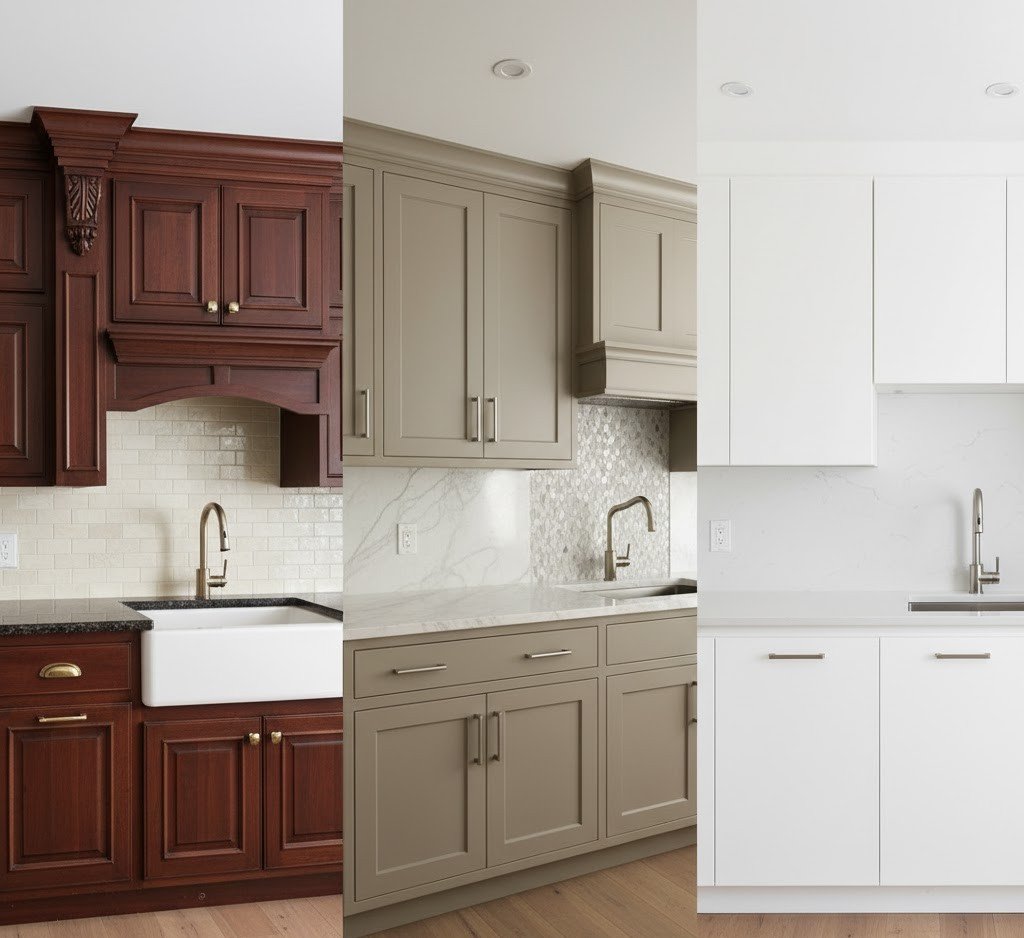
Walking into a cabinet showroom shouldn’t feel like decoding a foreign language. Yet here you are, staring at dozens of door styles wondering what makes one “traditional” and another “transitional.”Here’s the truth: choosing between kitchen cabinet styles 2025 doesn’t require a design degree. You need three things—understanding the core differences, knowing your budget, and being honest about your home’s personality.
Let’s break down traditional, transitional, and contemporary cabinets so you can make a confident decision before your coffee gets cold.
What Makes Each Style Different?
Before we dive deep into each style, here’s a quick visual comparison to help you see the differences at a glance:
| Feature | Traditional | Transitional | Contemporary |
|---|---|---|---|
| Door Style | Raised panel with details | Shaker/flat frame | Slab (completely flat) |
| Ornamentation | Crown molding, corbels, rope trim | Minimal, clean lines | None—pure minimalism |
| Typical Colors | Cherry, mahogany, warm woods | Grays, whites, taupes | Bold colors, high-gloss, matte |
| Hardware | Decorative, ornate pulls | Simple, understated knobs | Hidden or sleek bar pulls |
| Cost Range | $150-$400/linear foot | $120-$300/linear foot | $130-$350/linear foot |
| Best For | Historic homes, formal spaces | Any home style | Modern/open-concept homes |
| Resale Appeal | High in traditional neighborhoods | Broadest market appeal | Strong in urban/modern markets |
Now let’s break down what each style actually looks like in your kitchen.
Traditional Kitchen Cabinet Styles 2025: The Classic Choice
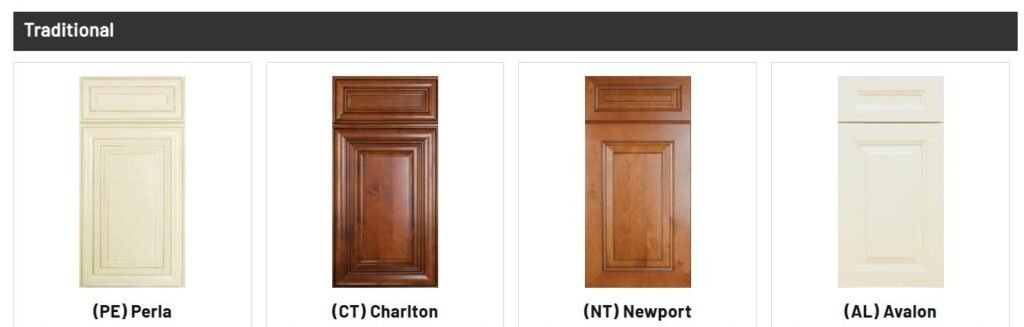
Think raised panel doors, crown molding, and decorative hardware that looks like it belongs in a European manor. Traditional cabinets lean into ornate details—think rope trim, corbels, and furniture-like feet. The wood? Usually cherry, mahogany, or oak in rich, warm tones.
What makes traditional cabinets stand out isn’t just the visible ornamentation. The construction itself reflects old-world craftsmanship. You’ll find dovetail drawer joints instead of staples, solid wood drawer boxes rather than particleboard, and hand-applied glazing that adds depth to the finish. Cabinet doors often feature multiple layers—a raised center panel surrounded by an intricate frame, sometimes with beaded details or applied moldings.
The hardware matters just as much as the cabinets themselves. Traditional designs call for substantial pulls and knobs, often in antique brass, oil-rubbed bronze, or polished nickel with decorative backplates. These aren’t afterthoughts—they’re jewelry for your kitchen. Many homeowners spend $15-30 per pull because the wrong hardware can cheapen an otherwise elegant design.
Color choices tend toward nature. Medium to dark stains showcase the wood grain—cherry develops a richer patina over time, while walnut offers dramatic contrast. Some homeowners paint traditional cabinets in deep, saturated colors like navy or forest green, but the details remain the star. Even painted traditional cabinets retain their carved elements and substantial profiles.
These cabinets work best in homes with architectural character. If you’ve got arched doorways or built-in bookshelves, traditional cabinets will feel right at home. They’re the kitchen equivalent of a tailored suit—formal, timeless, and undeniably elegant. But be honest about your lifestyle. Traditional cabinets with intricate crevices collect dust and grease more readily than smooth surfaces, which means more frequent cleaning to maintain that polished look.
Transitional Kitchen Cabinet Styles 2025: The Goldilocks Option
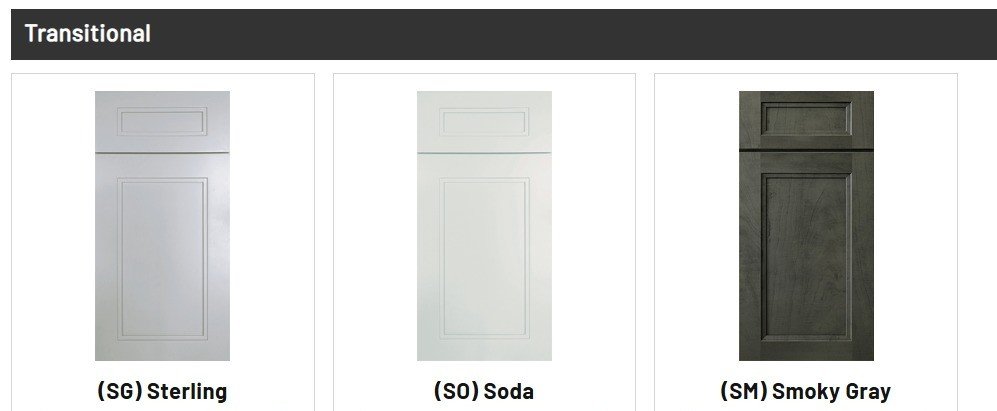
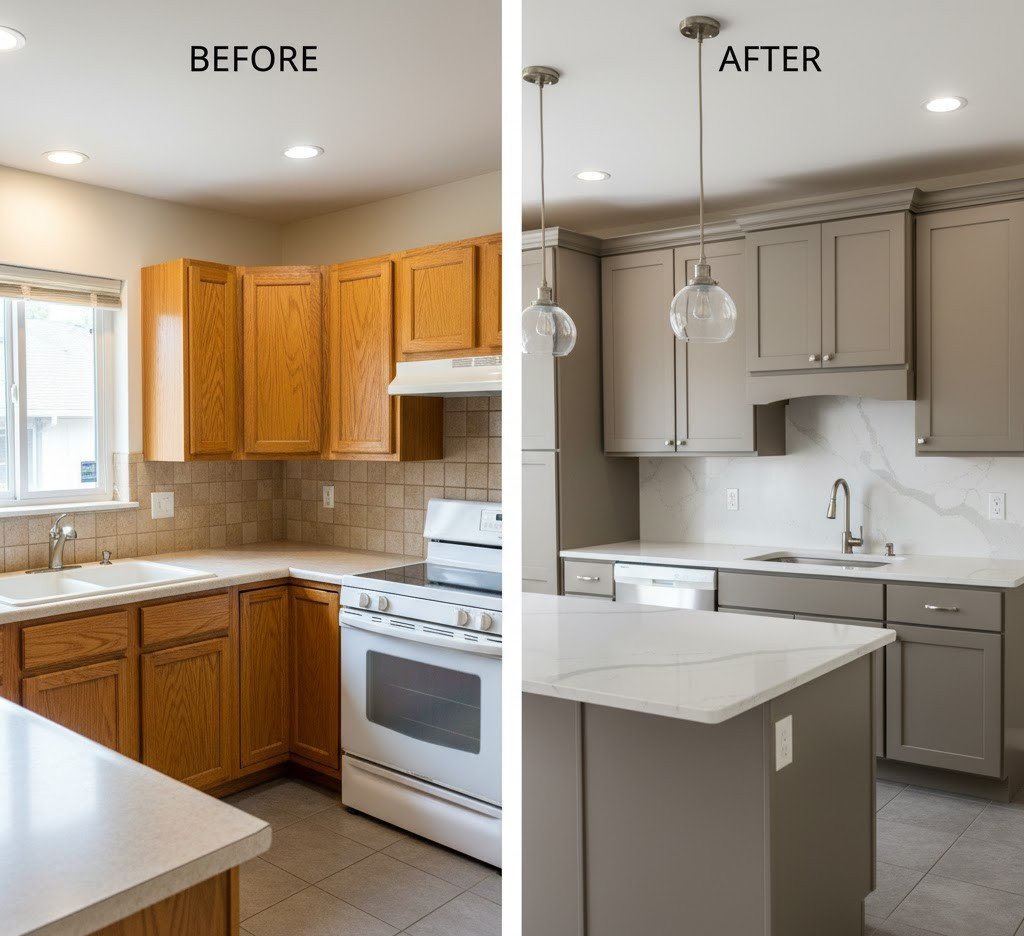
Can’t decide between ornate and minimal? Transitional cabinets split the difference, offering a perfectly balanced “just right” solution. You’ll see simple shaker-style doors (flat panel with a frame) paired with understated hardware, often in finishes like brushed nickel, matte black, or unlacquered brass. Colors tend toward sophisticated neutrals—warm grays, taupes, and soft whites that provide a timeless backdrop. No fancy carvings, but not stark either; the beauty lies in the clean lines and expertly curated proportions.
This style works in almost any home because it refuses to commit to extremes. Got a 1950s ranch you’re modernizing? Transitional works by bridging the home’s original character with contemporary desires. Building a new farmhouse? It still works, offering a more refined and less rustic take on the aesthetic. Its inherent flexibility, which allows it to pair beautifully with both quartz waterfall islands and classic marble countertops, explains why the debate over shaker vs flat panel cabinets dominates design forums right now.
The true genius of transitional design is its role as a chameleon. It provides a quiet, cohesive foundation that lets your other design choices shine. Whether you introduce texture with a natural stone backsplash, add warmth with open wood shelving, or inject personality through bold lighting and decor, the cabinets remain a harmonious constant. They are the ultimate diplomatic player in interior design, seamlessly mediating between old and new, traditional and contemporary, ensuring your kitchen never feels dated or overly trendy. This enduring appeal makes transitional a wise long-term investment for both your daily living and your home’s value.
Contemporary Kitchen Cabinet styles 2025: The Minimalist Move
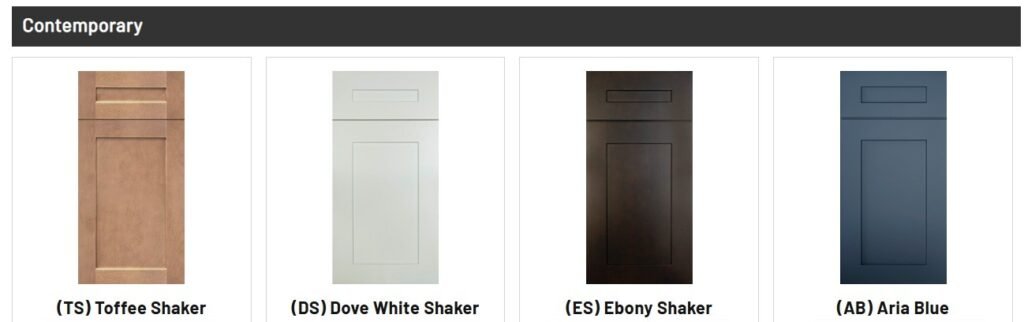
Door Style: Defined by flat-panel, or “slab,” doors with absolutely no ornamentation, beading, or profiling.
Hardware: Often features a fully integrated, invisible look.
Achieved through push-to-open mechanisms or touch-latch systems.
Alternatively, uses discreet, recessed finger pulls (known as J-pulls or channel pulls) carved directly into the door.
Finishes: Offers a wide spectrum, from ultra-sleek to softly textured.
High-Gloss: Reflective lacquer that amplifies light and creates a sense of larger space.
Matte & Textured: Non-reflective surfaces that feel modern yet warm, hiding fingerprints well.
Wood Grains: If used, wood is seen in flat, linear grains with a consistent, often opaque, stain.
Color Palette: Embraces both neutral and bold, dramatic statements.
Neutrals like pure white and cool gray are common.
Bold choices include deep navy, charcoal, forest green, and even high-contrast black.
Overall Aesthetic & Philosophy: Adheres to a “less is more” ethos, prioritizing clean lines, uncluttered surfaces, and geometric forms.
Best Suited For: Thrives in modern, open-concept homes with minimalist architecture and streamlined, panel-ready appliances.
Key Considerations:
Demands Commitment: Clashes visibly in traditional homes with ornate moldings and details.
Highlights Craftsmanship: Requires flawless installation and construction, as any imperfection in alignment is glaringly obvious.
Statement-Making: This is a definitive style choice for those who want a confident, modern kitchen.
Kitchen Cabinet Styles 2025: Cost Breakdown
Let’s talk numbers, because style means nothing if it blows your budget.
Traditional Cabinets
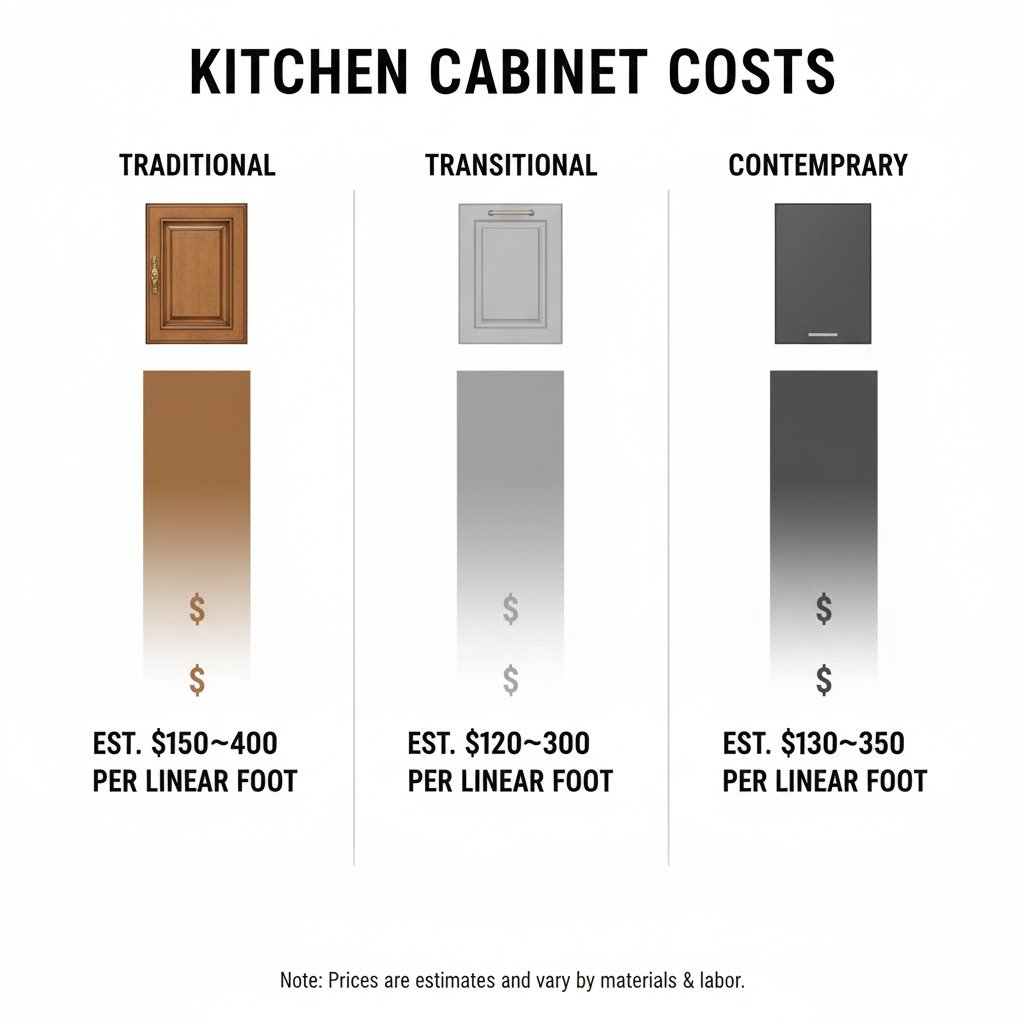
Expect to pay $150-$400 per linear foot installed. The craftsmanship costs more—those details don’t carve themselves. Custom traditional cabinets can push past $500 per linear foot if you’re going full bespoke.
Transitional Cabinets
Middle ground pricing: $120-$300 per linear foot. The simpler construction keeps costs reasonable, but quality materials still matter. You’re not cutting corners; you’re cutting unnecessary ornamentation.
Contemporary Cabinets
Surprisingly, these range from $130-$350 per linear foot. High-gloss finishes and specialized hardware add cost, but the lack of decorative elements balances it out. The real expense? Making sure every detail is perfect—contemporary design leaves nowhere to hide flaws.
Which Style Holds Value Best?
Here’s what real estate agents won’t always admit: the best kitchen cabinet styles 2025 for resale depends entirely on your neighborhood.
Selling a historic colonial in the Northeast? Traditional cabinets will help you close faster. They match buyer expectations and don’t require imagination.
Contemporary cabinets shine in urban condos and modern builds where buyers specifically want that aesthetic. Install them in a suburban split-level, and you might narrow your buyer pool.
Transitional? This is your safe bet for maximum appeal. It doesn’t alienate traditional buyers, and it doesn’t bore contemporary fans. One study from the National Association of Realtors found that neutral, updated kitchens recoup 70-80% of their cost at resale. Transitional styles fit that bill perfectly.
The 3-Minute Decision Framework
Stop overthinking. Answer these four questions:
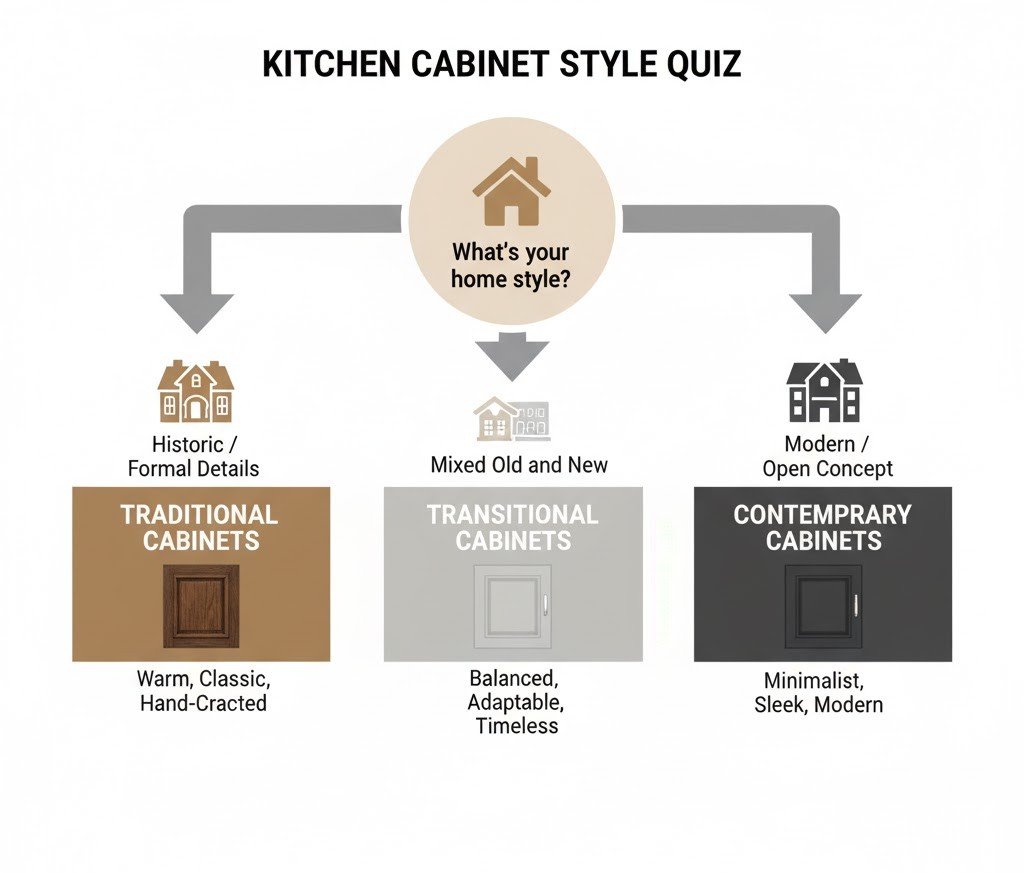
1. What’s your home’s existing style?
- Historic details everywhere? → Traditional
- Clean lines and open spaces? → Contemporary
- Mix of old and new? → Transitional
2. How long are you staying?
- Forever home? → Choose what you love
- Selling in 5 years? → Pick what buyers expect
3. What’s your honest budget?
- Under $5,000? → Transitional (best value)
- $5,000-$8,000? → Any style works
- $8,000+? → Go traditional or high-end contemporary
4. Do you want to stand out or blend in?
- Make a statement? → Contemporary
- Create warmth? → Traditional
- Stay versatile? → Transitional
Most people land on transitional after this exercise. It’s not boring—it’s strategic.
Common Mistakes to Avoid
Ignoring your appliances
Stainless steel appliances look odd with heavy traditional cabinets. Panel-ready appliances (where the cabinet front covers the appliance) work with any style but cost extra.
Forgetting about lighting
Contemporary cabinets need excellent lighting to prevent them from feeling cold. Traditional cabinets create shadows with all those details. Plan your lighting first, not last.
Mixing styles accidentally
Want to combine traditional island cabinets with contemporary perimeter cabinets? Hire a designer. What looks “eclectic” in your head often looks “confused” in reality.
What’s Trending Right Now
Kitchen cabinet trends shift, but here’s what’s moving in early 2025:
- Two-tone cabinets (darker lowers, lighter uppers)
- Warm wood tones making a comeback in transitional spaces
- Integrated appliances across all styles
- Thicker door profiles (even in contemporary designs)
- Hardware as jewelry—statement pulls are back
The smartest move? Pick a classic foundation in your chosen style, then add trendy elements through hardware, paint color, or open shelving. You can swap out brass pulls in two years. You can’t easily swap out cabinet boxes.
FAQ
How long do kitchen cabinets typically last?
Quality cabinets last 20-50 years depending on construction and care. Solid wood outlasts particleboard every time. The style might feel dated before the cabinets actually wear out.
Can I paint my existing cabinets instead of replacing them?
Absolutely, if the boxes are solid. Painting works best on flat-panel doors (transitional/contemporary). Traditional cabinets with heavy details can look muddy when painted. Budget $3,000-$8,000 for professional cabinet painting.
Do contemporary cabinets show fingerprints?
High-gloss finishes show everything—fingerprints, smudges, water spots. Matte finishes hide more but can be harder to clean. If you’ve got kids, skip the gloss unless you enjoy constant wiping.
What if I choose wrong?
Cabinet refacing (replacing just the doors and drawer fronts) costs 30-50% less than full replacement. You’re not locked in forever, but choosing carefully the first time saves money and hassle.
Ready to move forward? Stop second-guessing yourself. If you’ve read this far, you already know which style speaks to you. Trust that instinct, verify it fits your budget, and pull the trigger.
Need expert help narrowing down your options or getting accurate quotes? Our team specializes in matching homeowners with the perfect cabinet style for their space and budget. Call us at (954) 553-9009 for a free consultation. We’ve installed thousands of kitchens and can spot potential issues before you waste money on the wrong choice.
Your dream kitchen is three minutes of decision-making away. Make the call.
